 By skyforbes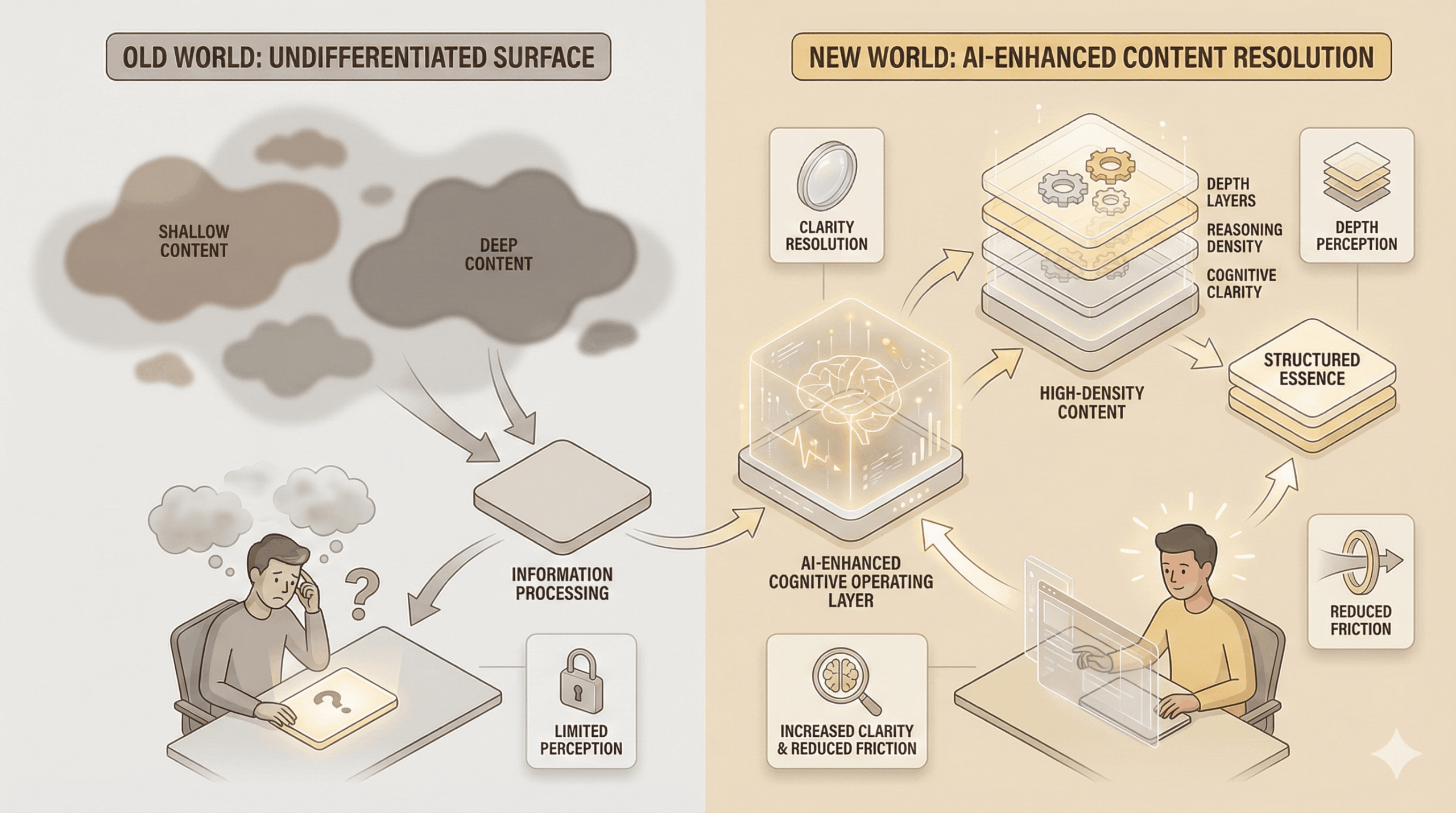

As this contrast sharpens, reading in the AI era begins to feel like switching from 720p to 4K. Flat content is instantly recognizable. Shallow arguments reveal themselves within a few sentences. Emotional bait looks transparent instead of persuasive. At the same time, the rare instances of multi-layer reasoning, compressed insight, or non-linear structure stand out like a different species of writing. AI unintentionally trains our perception simply by presenting a vast quantity of material that shares the same low-density signature. The moment you notice that some writing “moves differently,” that it carries internal tension or layered judgment, your density resolution has already shifted.
This leads to a future where the real competition in content isn’t about volume, speed, or aesthetics—it’s about layers. AI can generate endless text, but it cannot easily reproduce the structural depth of human reasoning. Even casual users now report that AI has made it easier to “see through” many posts, articles, or videos they used to find convincing. And if you can already explain—or at least feel—why certain writing hits harder, lasts longer in your mind, or seems structurally alive, it means your perception is evolving. AI may automate creation, but it is upgrading human discernment, and this perceptual shift may become one of the most significant side effects of the AI era.