 By skyforbes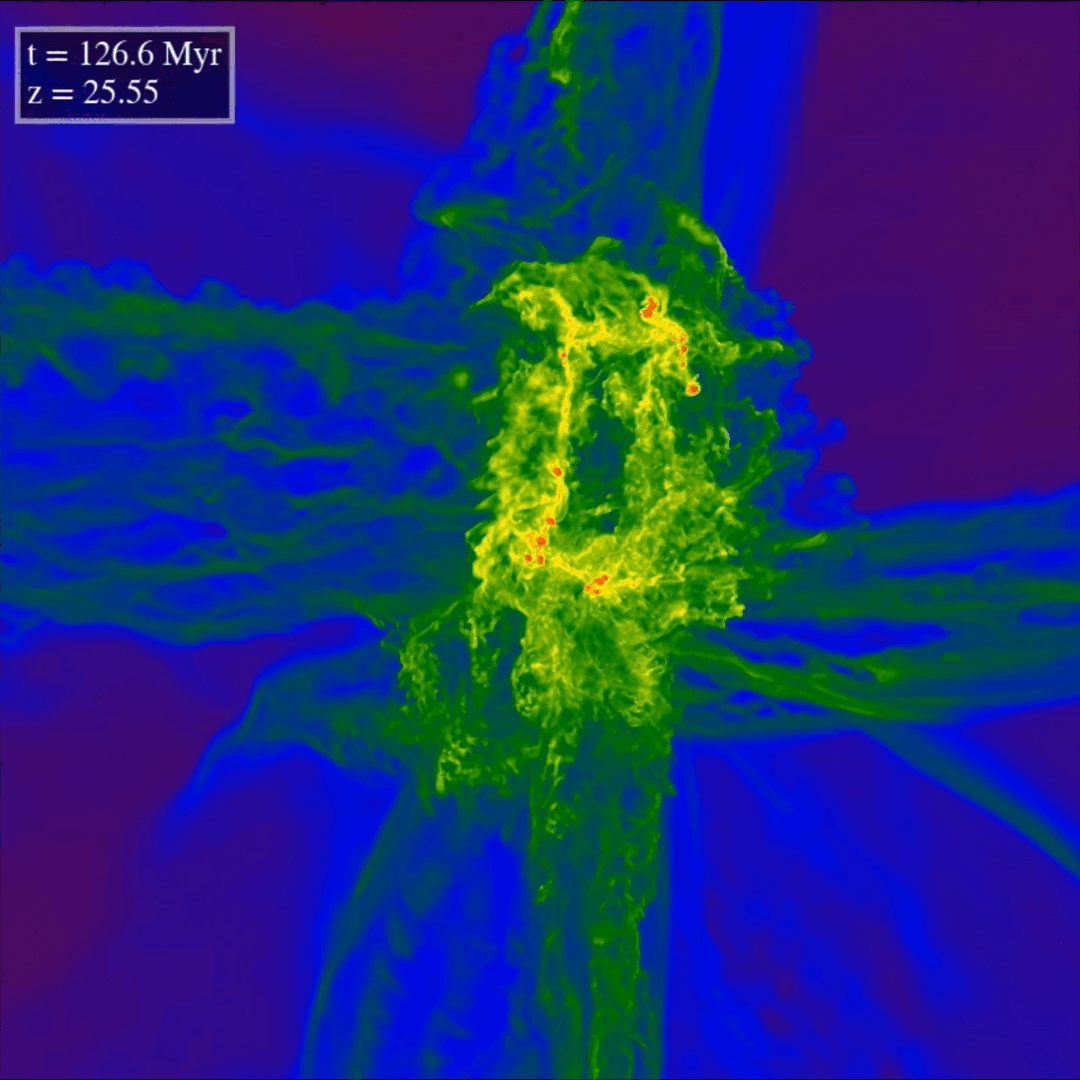

These stars burned brightly for only a short time before collapsing into massive black holes. By analyzing the chemical makeup of a galaxy called GS 3073, they found an unusual nitrogen-to-oxygen ratio that can't be explained by normal stars. This nitrogen excess matches the type of star predicted to exist in the early universe — supermassive stars that produced a lot of nitrogen through a process involving helium and carbon.
When these stars died, they didn't explode; instead, they collapsed directly into black holes, possibly seeding the supermassive black holes we see today. This discovery gives astronomers a new way to study the universe’s first stars and provides important clues about how the first black holes and elements formed in the "cosmic Dark Ages." The researchers hope the James Webb Telescope will find more evidence of these giant stars in the future.
The above simulated video shows the birth of a primordial quasar that was made possible by one of these giant stars.
First direct evidence of “Monster Stars” 1000-10,000x more massive than the Sun
byu/Busy_Yesterday9455 inspaceporn