 By skyforbes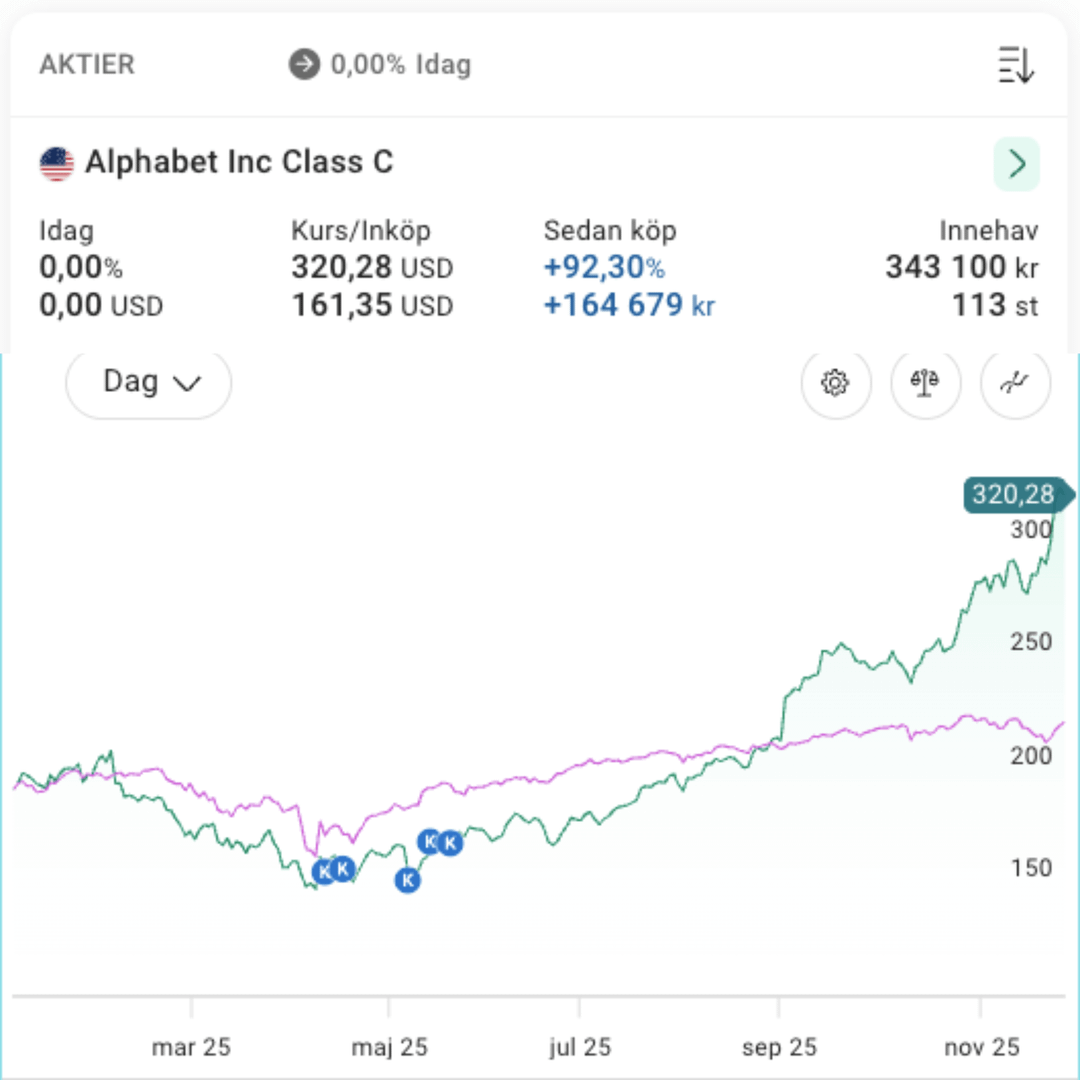

"Artificial intelligence would be the ultimate version of Google. So we had the ultimate search engine, it would understand everything on the web; it would understand, um, you know, exactly what you wanted, and it would give you the right thing. And that's obviously artificial intelligence." Google Co-Founder Larry Page Predicts the Future of Search With AI (2000) – For those that don’t know, it was supposedly Larry Page’s attitudes about AI that inspired Elon Musk and Sam Altman to start OpenAI.
Full-stack AI
Now, imagine you are tasked with implementing AI in your organisation. Your first thought will probably be: Which should I pick? ChatGPT immediately comes to mind, but you want to do your research properly. Through your research, you find that Google's Gemini 3 seems best or second best right now and that their flash models tend to give the most intelligence per buck, at least among American AI models. Plus, they have one of the leading video models and the leading image model. Perfect. Google seems like a good choice. Especially since people in the company might already be using their AI applications like AntiGravity (especially if they improve).
But what about implementation? Google offers enterprise-ready API:s via Vertex with more features coming like auth, database and payments, Google Cloud for storage, and now even at location TPU:s that are specialized to run Gemini models as cheaply as possible. Super. Suddenly, your entire AI ecosystem is locked into Google, and along the way, you never touch an Nvidia product.
But before you make your final decision, you ask yourself: Will Google be able to compete with Nvidia on the hardware side over the long term, so I don’t get vendor-locked with an inferior offering?
I’ve done enough research about Jensen that I would never want to bet against the man – and I think a ton of companies will feel the same way. I don’t imagine Nvidia is particularly – or really at all – threatened by Google in the short term, though Google's TPUs may force Nvidia to lower its prices, reducing profit margin. Apparently, OpenAI received an Nvidia discount of 30 % because of it, according to Dylan Patel from SemiAnalysis, worth remembering is that piece by him is still bullish on Nvidia. Though what is actually important is not the current competitiveness of the TPUs but that Google has a flywheel effect that has barely begun spinning and will become more powerful in the future.
AlphaEvolve
I allocated around 85 percent of my portfolio into Google in May after Google DeepMind revealed AlphaEvolve: A Gemini-powered coding agent for designing advanced algorithms. The evolutionary AI system had, in secret, improved everything from the training of their AI models to Google's hardware, i.e., their TPUs that are today so good that Anthropic secured a multi-billion dollar deal for them, with Meta considering the same.
The remarkable thing was that AlphaEvolve had been using Gemini 2.0 Flash and Pro, not even Gemini 2.5. Today, it’s most likely using their internal Gemini 3.0 DeepThink variations, and in the future, it will use far more powerful models than that. Meaning that the better Google’s AI models get, the better AlphaEvolve will get at improving Google’s models and hardware. The cheaper and better Google’s hardware, the more powerful models can be built and run. The more powerful the models, the better the hardware. And so on.
Better AI models could also destroy some of Nvidia’s CUDA moat. One reason CUDA has been so important is that it has made it easier for human programmers to write AI hardware code, causing a network effect where everyone learnt CUDA. But once AI models become sufficiently advanced, the programming difficulty may not be a concern, or Google and Gemini create some CUDA-variant of their own. Rumors also exist of them doing just that.
All in all
This means that every time Google releases an AI model that is the best in the business, it’s an acknowledgement that you can build the best models without Nvidia. If they do it often enough, AI labs will eventually wonder: can you build better AI models without Nvidia? This will be especially true if other AI-labs do it too: “resulting in Anthropic training Sonnet and Opus 4.5 on multiple types of hardware including TPUs”.
Does this mean I think Nvidia is done for? Not at all, as I said, I've spent enough time studying Jensen that I'd never want to bet against him. After all, he is a man who roommated with a 17-year-old ex-con covered in knife scars at the age of nine to become the 5-trillion-dollar man. Jensen has a ton of cards to play, and he’s already playing them perfectly.
Nvidia still has a hardware/hardware-software lead and is likely to retain it at least in the near future. If they make a substantial compute leap, Jensen can massively scale up Nvidia’s AI lab, absorb one of the AI labs, or partner with one of them and go for gold in the AI race. He is securing long-term deals with customers to ensure they stay with Nvidia. Nvidia themselves in using AI in its development. He is investing in the entire AI ecosystem. Nvidia will likely begin to offer full-stack solutions of its own. And the compute needs in the future are likely to be so massive it should benefit Nvidia, Google and AMD.
Disclaimer: I hold a significant long position in Google (Alphabet). The views expressed in this post are for educational purposes only and are my personal opinions and predictions regarding the AI landscape and do not constitute financial or investment advice. Please conduct your own due diligence before making any investment decisions.
TLDR; Google is unlikely to pose a large threat to Nvidia in the short term, though the perceived threat might force Nvidia to decrease their profit margin. But over the long term, Google’s full stack offerings – AI models/applications, cloud and TPUs – with AI model’s designed to improve AI models and hardware (AlphaEvolve) getting better, Google might even take a long term lead. Though, Jensen is playing Nvidia’s cards perfectly.