 By skyforbes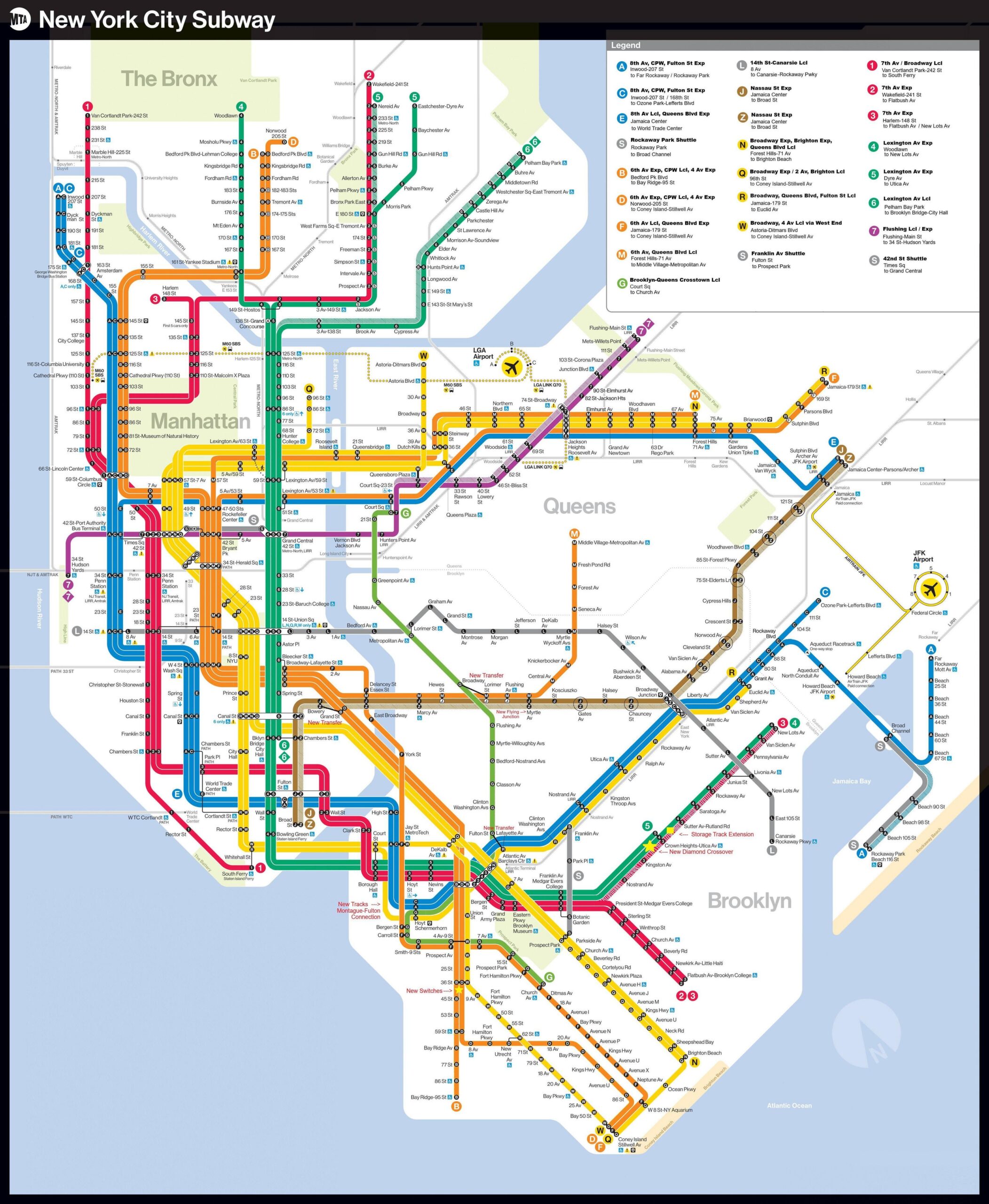

Recently the F/M swapped routes to improve reliability. If we want a subway system that actually runs on time and doesn't suffer from cascading delays, we will need more changes like the F/M swap. What's next?
The Problem
Currently there are several notorious "chokepoints" that frequently cause delays for the entire system. They are practically responsible for making you late every day. These chokepoints are due to multiple lines sharing the same track (like the N, R, and W on the Broadway line). Think of it like a highway where 3 lanes merge into 1, and then split back into 3 again a mile later. Here are some specific chokepoints that strangle the whole city. One delay spirals instantly.
- Rogers Junction (2,3,4,5) – This is where the 2, 3, 4, and 5 trains all tangle together. Trains have to drive across oncoming traffic to switch tracks. Every time a 5 train needs to cross over, the 2 and 3 trains have to sit at a red light. It limits the capacity of every line going through
- DeKalb Avenue (B,D,N,Q) – Before the Manhattan Bridge, the B, D, N, and Q all have to sort themselves out. It’s a dispatching nightmare. If one train is late, all the trains behind it will be sitting at a red light
- 60th Street Tunnel (N,Q,R) – This tunnel is overcrowded. This is the bottleneck for all Broadway trains entering/leaving Queens. The N, R, and W all have to fit through this one tunnel
- 34th St-Herald Square (N,Q,R,W) – The N has to switch between local/express tracks to get from Manhattan to Queens and vice versa. If the N is late, the R and W get stuck.
- Canal Street (A,C,E) – If an uptown E train arrives late, the uptown C behind it sits at a red light, which causes the A to get stuck behind the C
- 59th St–Columbus Circle (A,B,C,D) – If uptown A arrives late, the D train behind it gets a red light, and so does the B train behind that
My Solution
(See image of proposed service diagram)
Looking for more opinions on this. How will this affect your commute?
The Pros
- Less Delays. The system becomes much more reliable.
- You Get More Trains. You wait 2 minutes for a train instead of 8. Currently, because trains have to wait for each other to merge, there is a limit to how many you can squeeze in. If you fix the merge, you can run trains bumper-to-bumper.
- Faster Rides. Trains no longer sit in the dark tunnels waiting for a switch to flip. The ride is physically faster because the track ahead is always clear.
- Low Cost. The operational cost of re-routing trains is basically free. In comparison, phase 1 of the Second Avenue Subway cost $4.5 billion for just a few miles and took 10 years to build.
The Cons
- Rider rage. You will lose your direct ride. Some routes would likely be cut or altered permanently to streamline the flow. You might have to transfer to get to your final stop. When the MTA cut the V train and replaced it with the M, people were furious about losing their direct connections.
The Verdict
Would you rather:
- Keep your direct ride, but have infrequent service, random delays, and wait longer for a train?
- Have to transfer, but the trains come frequently and reliably like clockwork?
Personally, I'm taking option 2. The "one-seat ride" is a luxury we can't afford if we want a modern system. What changes would you make to the system?