 By skyforbes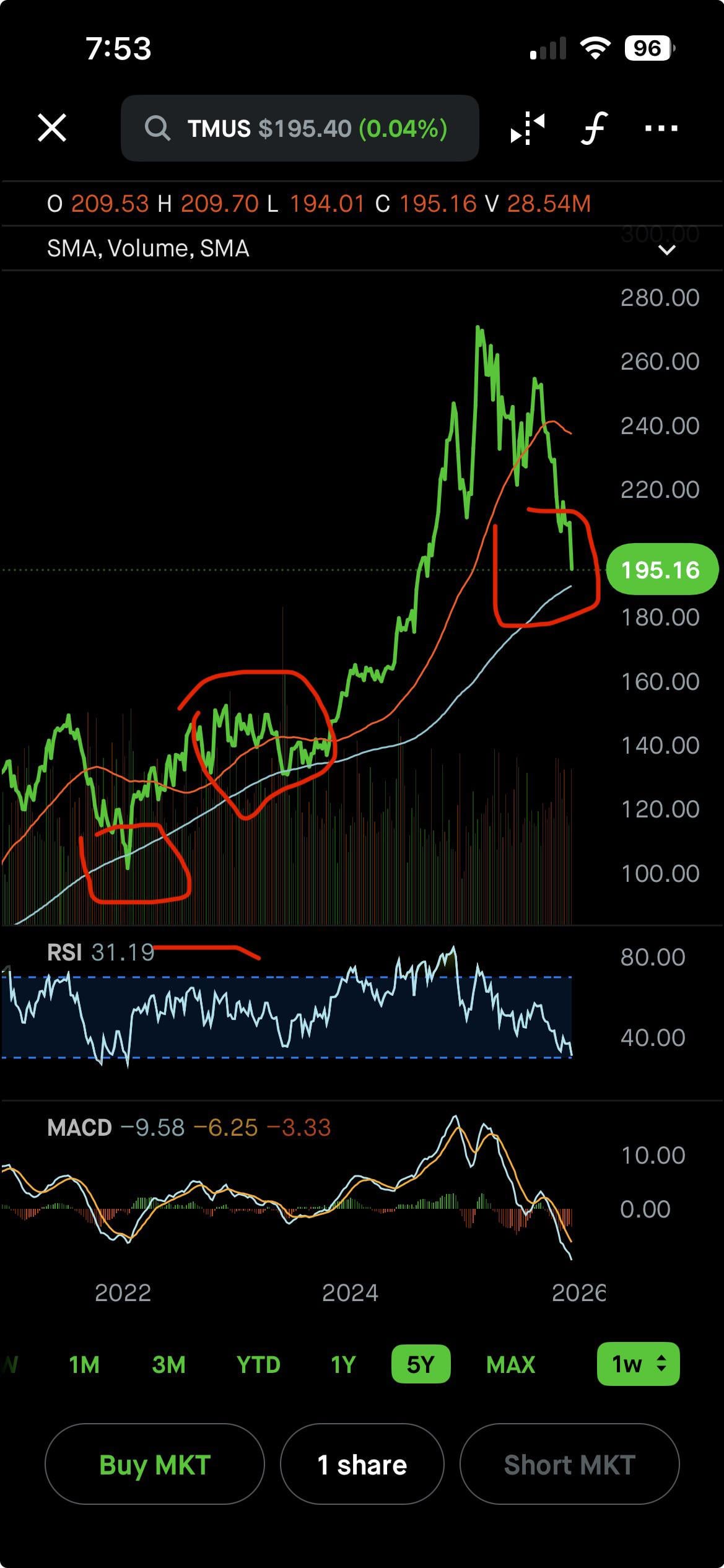

The fundamental case of why TMUS can meaningfully appreciate from here:
Sustained, above-consensus subscriber growth (volume engine): T-Mobile reported record postpaid customer additions in 2025 (millions of net adds across postpaid phone, other and prepaid from acquisitions), with large quarterly adds cited by the company and industry press. Strong net adds drive recurring service revenue, ARPU stability/upside, and superior churn economics vs. peers. This growth is the primary revenue engine that will compound cash flows. 
5G leadership and network scale that converts into share gains: T-Mobile built a broad mid-band 5G footprint faster than peers after the Sprint merger; that scale is translating to competitive advantage for coverage + performance, especially for price-sensitive consumers and suburban/rural areas. Faster, cheaper 5G motivates upgrades (premium plans, 5G broadband) and supports new services (fixed 5G broadband, enterprise customers). Company commentary and analysts emphasize its network-driven wins.
Diversifying revenue: broadband & fiber tuck-ins
T-Mobile is not just phones — they’ve added 5G broadband customers and have acquired fiber customers (e.g., Metronet acquisitions) to scale fixed connectivity offerings. Owning both wireless and fiber/fixed broadband increases wallet share per household and improves lifetime value. 
Material free-cash-flow (FCF) tailwinds + aggressive capital returns: Management has increased guidance for EBITDA and FCF; the company just authorized a large $14.6B shareholder return program (through 2026) and raised its quarterly dividend — this both reduces share count and returns cash to investors, supporting EPS growth and multiple expansion. Buybacks + dividend increase are direct catalysts for total return. 
Room for margin expansion (profit curve + operating leverage): As service revenue scales faster than incremental capex (once major 5G build is complete) and as fixed costs are spread over more subscribers, EBITDA margins can improve. Market commentary and management’s guidance point to steady service revenue growth (high-margin) and improving profitability. 
Valuation gap + analyst upside: Recent analyst coverage still implies meaningful upside — examples include buy ratings / price targets in the $275–$280 range, suggesting ~35–45% upside from current levels, supported by the fundamentals above and cash returns. If the market re-rates T-Mobile nearer to those comps, upside is substantial. 
Numbers that matter (evidence-backed):
Record net adds / scale: company reported multi-million postpaid adds in Q3 2025 (e.g., 3,287,000 postpaid phone & other adds referenced in the release / press). These are eye-popping numbers that materially grow revenue base. 
Service revenue growth: management reported double-digit growth in postpaid service revenue and mid/high single-digit on overall service revenue in recent quarters. That’s a high-quality revenue stream. 
Shareholder returns: $14.6B authorized program through 2026 + dividend increase to $1.02 per quarter (recently declared), both compress available shares and increase yield/total return. 
Valuation framework & target:
Base case (multiple expansion + FCF growth): If TMUS grows EBITDA modestly and continues buybacks that reduce share count ~3–5% annually, the market could re-apply a telecom / growth multiple lift (say from mid-teens to low-20s on EV/EBITDA) as growth proves durable. That supports a move into the $250–$300 range over 12–24 months. (Analyst targets cluster near $275–$280.) 
Conservative case: Execution slows but FCF and buybacks persist → low-double-digit total return from current price (dividend + modest multiple expansion) — downside limited by cash returns and resilient wireless cash flow.
Bull case: Continued share gains, ARPU stability, strong fiber/wireless bundling, and aggressive buybacks drive EPS substantially higher — stock re-rates to premium growth multiple → $300+ possible over 18–36 months.